Programming of Life

PoL Home PoL Reviews US Science PoL DVD PoL Prereq

View Programming of Life Video (over 125K views)

View PoL video (2012 Telly Award winner for best educational video) trailer or 4 minutes or author-selected excerpts

Recorded presentation "Programming of Life and It's Prerequisites"  

Members of Congress:  The details for obtaining your free PoL DVD will be here soon (they were given to a DC representative when your free PoL book was distributed) .  If you would be willing to help facilitate this distribution, please email don@scienceintegrity.org.  Thanks!

Anyone who wishes to become involved with other royaly-free distribution, please email don@scienceintegrity.org.  Links to such participants will be listed here.

About the author  

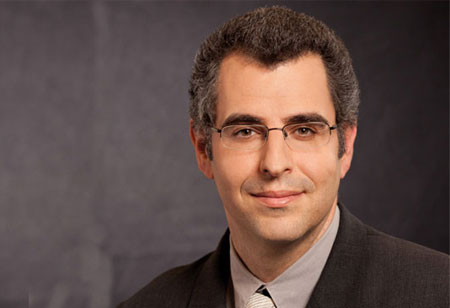
Dr. Don Johnson has earned Ph.D.s in both Computer & Information Sciences from the University of Minnesota and in Chemistry from Michigan State University. He was a senior research scientist for 10 years in pharmaceutical and medical/scientific instrument fields, served as president and technical expert in an independent computer consulting firm for many years, and taught 20 years in universities in Wisconsin, Minnesota, California, and Europe. He has made presentations on most continents, including in Russia, China, Australia, New Zealand, England, and Germany.

Book description (13-month: >10,000 copies, ranked #3 in molecular biology)

PoL highlights the informational aspects of life that are usually overlooked or ignored in chemical and biological evolutionary scenarios. Each cell of an organism has thousands (or millions) of interacting computers reading and processing digital information using algorithmic digital programs and digital codes to communicate information. Life is an intersection of physical science and information science. Both domains are critical for any life to exist, and each must be investigated using that domain's principles. Yet most scientists have been attempting to use physical science to explain life's information domain, a practice which has no scientific justification. 

Recommended sequence: video, Presentation PDF, Book

Programming of Life and its Prerequisites recorded PDF 

Video based on PoL now viewable FREE

View  45-minute professional video (with awesome animations): viewers have described it as "awesome," "FANTASTIC," "wonderful"; rushed? -- view 4 minutes of excerpts

Low-resolution version for limited bandwidth

Studio Presentation & PDF based on PoL book (more technical than above video)

Amazon link for book

Reviews for book

Table of Contents

  1. Math Basics: Probability and Large or Small Numbers
  2. Information Basics: Data and Information Types
  3. Evolution of Computer Hardware and Software
  4. Life Basics
  5. Shannon Information in Life
  6. Prescriptive Programming Information in Life
  7. Combining Life’s Information Types
  8. Programming Increasing Complexity in Life
  9. Unresolved Difficulties of Life's Information Requirements

References – over 350 from multiple disciplines

Eight appendicies for added depth of coverage

Excerpts (click "US Science" above for impact of current scenarios)

This book stresses the principles of information science to show that the natural scenarios proposed so far fail to account for life's information and related processing systems. The book doesn't propose any alternative scenario, as that would fall outside science, just as the current scenarios do.

Pertinent Quotes from Programming of Life (these will make sense after reading PoL)

(vii) This book presents the basis for bioinformatics, which is the study of the information in life... By the time you finish this book, you will have a fairly good understanding of basic bioinformatics, as well as two important subsets, biosemiotics and biocybernetics... Biosemiotics is the characterization of the symbolic representations within life, which is filled with digitally-coded symbolic messages. Biocybernetics involves self-sustaining systems that integrate different levels of information and its processing, including controls and feedback, within biological systems. This is where "programming of life" fits in.

(37) Since life involves information, it must follow the rules of information theory, including that of transferring information... whatever the source of life (which is scientifically unknowable), the alphabet involved with the origin of life, by the necessary conditions of information theory, had to be at least as symbolically complex as the current codon alphabet.

(53) For functional communication (including controls) to occur, both sender and receiver of each communication step must know the communication protocol and how to handle the message. In each cell, there are multiple operating systems, multiple programming languages, specialized communications systems, encoding/decoding hardware and software, error detection and correction mechanisms, specialized input/output channels for organelle control and feedback, and a variety of specialized "devices" to accomplish the tasks of life... The challenge for a purely physical origin of such a cybernetic complex interacting computer system is the need to demonstrate that the rules, laws, and theories that govern electronic computing systems and information don't apply to the even more complex digital information systems that are in living organisms.

(83-84) Known facts of life include its extreme cybernetic complexity, with millions of interacting co-dependent structures and components. Life is cybernetic in that it generates and controls its components using its components. Life’s control and communication is digitally-based, and can be analyzed as a multi-computer system.

Some of the specific problems that require explanation before propagating naturalistic speculations as science include the following.

How did nature write the prescriptive programs needed to organize life-sustaining metabolism? Programs are shown by computer science to require a formal solution prior to implementation. How did inanimate nature formally solve these complex problems and write the programs? How did nature develop the operating systems and programming languages to implement the algorithms? How did nature develop Turing machines capable of computational halting? How did nature develop the arbitrary protocols for communication and coordination among the thousands (or millions) of computers in each cell?

How did nature develop multiple semiotic coding systems, including the bijective codon-based coding system (for symbolic translation) that involves transcribing, communicating, and translating the symbolic triplet nucleotide block-codes into amino acids of the proteins? How did nature develop alternative generation of such messages using techniques such as overlapping genes, messages within messages, multi-level encryption, and consolidation of dispersed messages? A protein may obtain its consolidated prescriptive construction instructions from multiple genes and/or from the "junk" DNA, sometimes with over a million nucleotides separating the instructions to be combined.

How did nature defy computer science principles by avoiding software engineering’s top-down approach required for complex programming systems? How did nature produce complex functional programs without planning by randomly modifying existing algorithms? How did multiple such programs become simultaneously modified to result in the production of irreducibly complex structures?

Speculation is important when generating or imagining new scientific theories. Scientists should strive to keep such speculation within the scientific community, however. Since the public tends to view what a scientist expresses as a view or belief as being "truth," it is important not to propagate unsubstantiated speculation as something worthy of consideration by non-scientists. It should be noted that all science is tentative, so new findings may require modification of what is considered "true."

The questions raised in this book require scientific answers before promoting as "science" any scenario for the origin of life or the origin of species. Perhaps different avenues of thinking are required in order to find scientific "truth" in these areas. Doggedly insisting that a scenario is true despite the evidence is unscientific. Maybe it’s time to leave the "flat-earth" mentality that views things only from a particular limited perspective, and really examine what science is telling us.

Craig Venter artificial genome interview or exerpt (in case you doubt there is real computer hardware and software in every cell) that includes Venter's statement: "It certainly changed my views of definitions of life and how life works... Life is basically the result of an information process, a software process. Our genetic code is our software."